
HFC-227ea
- Home
- Chemical System
- HFC-227ea
Enquire Now
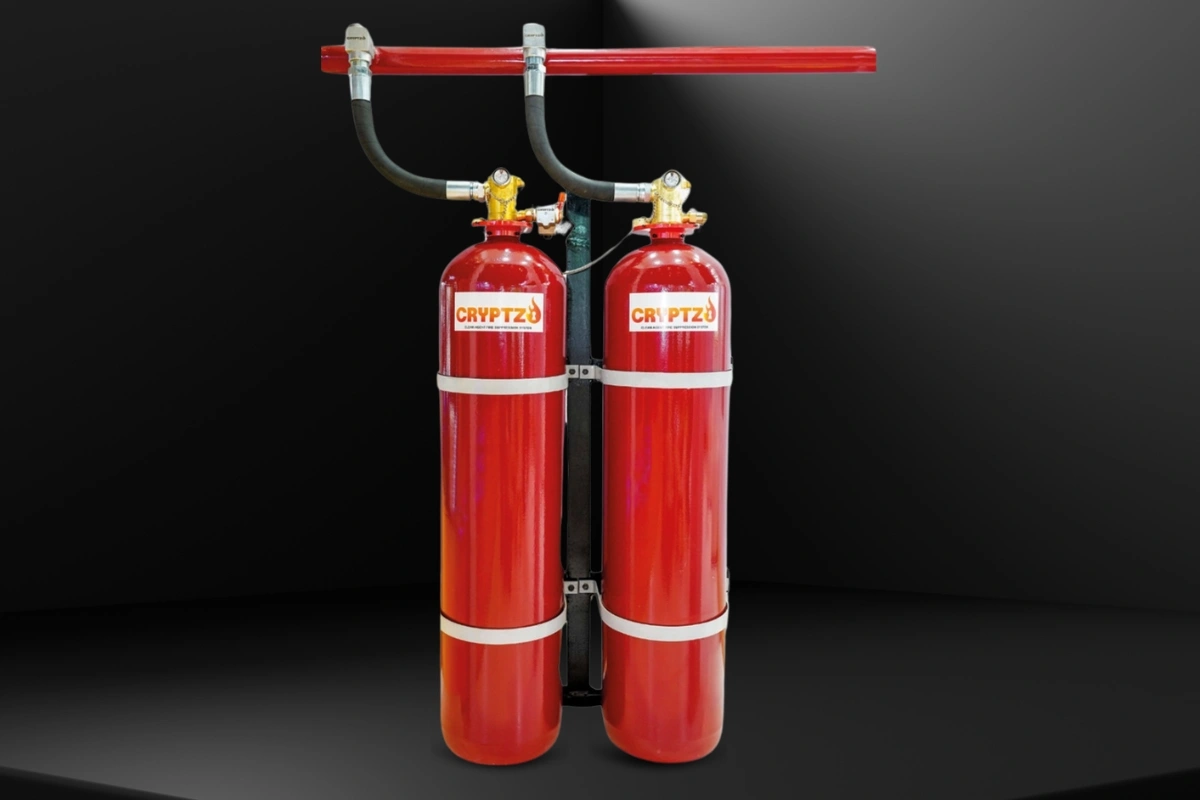
Typical HFC-227ea Clean Agent System Layout
HFC-227ea is the Time-Tested Fire Suppression System for Facilities that cannot afford the Downtime Associated with a Fire or Typical Water-Based Fire Suppression Systems. HFC-227ea agent Systems Extinguish Fire Quickly by Discharging in 10 Seconds. Stopping Ordinary Combustible, Electrical, and Flammable Liquid Fires before they Cause Significant Damage. When Fire Is Extinguished this Quickly, It Means Less Damage, Lower Repair Costs, and an Extra Margin of Safety for People. It also Means Less Downtime and Disruption of Business. Apart from Being Rapid and Effective, This Extinguishing agent is recognized by the Environmental Protection Agency as a Safe agent for the Environment.
What is HFC-227ea ?
The US EPA, in the Federal Register, May 12, 1993, Recognized the Inherent Safety of HFC-227ea in accepting it for use in Occupied Space Protection at up to 9.0% V/v without Mandated Egress Times, or up to 10.5% V/v with Mandated Egress Times. This means that Occupied Spaces can be Safely Evacuated, even in the Presence of HFC-227ea at Design Concentrations. Most HFC-227ea systems are designed at Concentrations Between 7.0% – 7.5% V/v.
How Does it Work ?
HFC-227ea’s Mechanism of Extinguishing Fires Is active. Its Primary Action Is Through Physically Cooling the Fire at the Molecular Level. HFC-227ea Removes Heat Energy from the Fire to the Extent that the Combustion Reaction cannot Sustain Itself. It does not work by Oxygen Starvation.
Safe for Humans and the Environment
The EPA evaluates the Significant new Alternatives Policy (SNAP) to ensure Chemicals wouldn’t Cause Greater Damage to Human Health or the Environment. HFC-227ea Clean Agents is a Snap-approved.
Why 42 Bar System ?
While a 25 25-bar system Is Suitable for the Majority of Hazards. A 42-bar offers additional Flexibility in the Design of Systems to protect larger or more Complex Hazards. These include those Incorporating Directional valves for Multi-Zone Protection and where system Cylinders are to be located further from the Protected area.
NFPA 2001, Requirements for Minimum Values
| Agent | Class A MEC | Class A Design | Class C Design | Class B Design |
| HFC-227ea | 5.2 | 6.7 | 7 | 8.7 |
Environmentally Friendly
| Description | HFC-227ea |
|---|---|
| Ozone Depletion Potential (ODP) | 0.0 |
| Global Warming Potential (GWP) | 3220 |
| Atmospheric Lifetime (Years) | 31-42 |
| SNAP (Yes / No) | Yes |
HFC-227ea Fire Suppression Agent:
HFC-227ea Agent Compiles with NFPA Standard 2001 Standard on “Clean Agent Fire Extinguishing Systems.” EPA Snap Program (Significant New Alternate Policy), the HFC-227ea Is Classified as Suitable for Use in occupied areas and has no ozone-depleting potential (ODP)
Description:
HFC-227ea systems reach Extinguishing levels in 40 Seconds or Less, Stopping Ordinary Combustible, Electrical, and Flammable Liquid Fires before they can Cause Significant Damage. That’s the Fastest Fire Protection available. When a Fire Is Extinguished this Quickly, It Means Less Damage, Lower Repair Costs, and an Extra Margin of Safety for People. It also means less downtime and Disruption of Business.
Physical & Chemical Properties Empirical
| Empirical formulae. | CF3CHFCF3 |
| IUPAC Designation | 1,1,1,2,3,3,3,-Heptafluoropropane |
| ASHRAE Designation | .HFC-227ea |
| Molecular Weight | 170.03 |
| Boiling Point at 1 Atm | 2.6 °C (-16.4 °F ) |
| Freezing Point | -131⁰C ( -204°F ) |
| Heat Vaporization @B.P | 56.7Btu/ib |
| No Observable Adverse Effect Level | 9.00% |
| Lowest Observed Adverse | >10.5% |
| Ozone Depletion Potential | 0 |
| Atmospheric Lifetime, years | 34.2 years |
| Global Warming Potential | 3220 |
HFC-227ea Cylinder
The Cylinders are Manufactured and marked in Accordance with is 7285 standard and approved by Peso for their use. The Cylinders are available in the Following sizes. 34ltr., 80ltr, 120ltr and 140ltr. and Welded Cylinder are Complying to Dot Specification. The Cylinders are available in the following Sizes. 15ltr, 29ltr, 49ltr, 80ltr, 104ltr, 148ltr, 227ltr and 369ltr, the Cylinders are Charged with HFC-227ea and Super Pressurized with Dry Nitrogen at a Total Pressure of 360 Psig (25 Bars) or 610 Psig (42 Bars) at 70°f (21°c) to assure rapid Discharge at Temperatures as Low as 32°f (0°c) Storage Temperature.
These Cylinders have the optional Facility of a Switch-In-Gauge Unit, designed to Monitor the Pressure of the Cylinder. The 2 in 1 Unit offers the Facility to Monitor Cylinder Pressure Locally and Remotely Via using Fire Alarm Panel Interface Unit or any other Control Panel.